Never cooked a steak? Start here. Five steps cover everything that matters, then five recipes take you from foolproof to steakhouse, in order.
The five steps
Buy a good, thick steak. For a first steak, choose a ribeye or New York strip about 1 to 1 1/4 inches thick, USDA Choice or better. Thick steaks are easier: they brown before the inside overcooks. See the beef cuts chart.
Salt it early and dry it well. Salt all over at least 45 minutes ahead (or right before cooking, never in between), and pat it completely dry. A dry surface is what makes a brown crust.
Get the pan very hot. A cast-iron skillet over high heat, with a thin film of high-heat oil, until it just starts to smoke. Lay the steak in and do not move it for 3 to 4 minutes.
Use a thermometer, not a timer. Take it off the heat at 125°F for medium-rare (it rises as it rests). The USDA safe minimum for steak is 145°F with a 3-minute rest. See the steak doneness chart.
Rest it, then slice across the grain. Rest 5 to 10 minutes on a board, then cut across the lines of the muscle fibers.
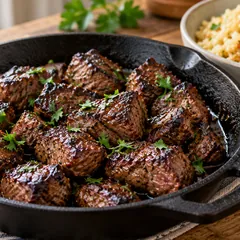
Bite-size sirloin cubes seasoned and air-fried until browned outside and juicy inside, then tossed in melted garlic butter and parsley. Ready in 20 minutes; serves 4.
Sirloin tips marinated in soy, garlic, brown sugar and Worcestershire, then grilled or pan-seared until caramelized. A New England pub favorite. Serves 4.
A thick ribeye seared hard in a smoking-hot cast-iron skillet, then basted with butter, garlic and thyme until medium-rare. Steakhouse results at home in about 20 minutes; serves 2.
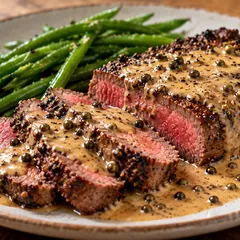
Strip or filet steaks pressed into cracked black peppercorns, seared in a hot skillet and finished with a creamy brandy pan sauce. A French bistro classic for two.
A 1 1/2 to 2-inch steak cooked slowly in a 250°F oven, then seared in a blazing skillet for an even edge-to-edge pink center and a dark crust. Serves 2 to 3.
Something went wrong? Our steak troubleshooting explains gray, tough and burnt steaks.