
The brownie as Chicago's Palmer House hotel has made it since the 1890s: dense and fudgy, topped with walnuts and a shiny apricot glaze. Makes 24.
Contains: milk, egg, tree nuts, wheat. Based on the ingredients as written; check package labels, which can change.
Updated
Jump to: Ingredients | Instructions | Tips | Questions | Storage | Print recipe
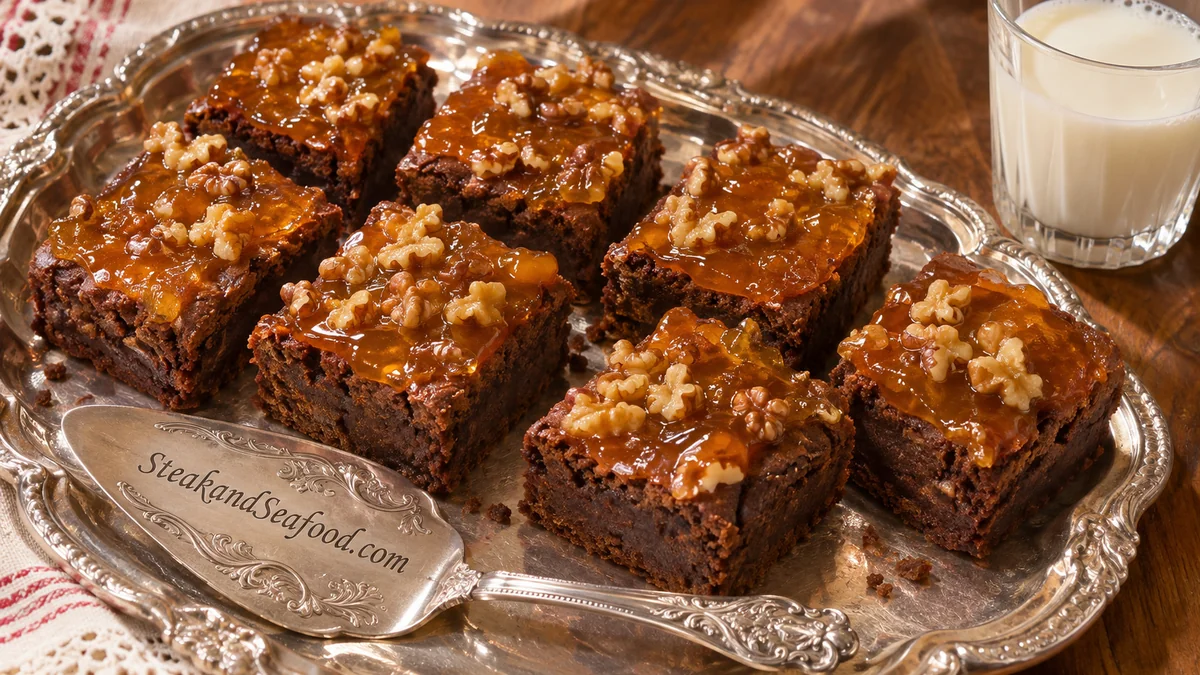
According to the Palmer House hotel in Chicago, the brownie was born in its kitchen. In 1893, Bertha Palmer, the hotel owner's wife, asked pastry chef Joseph Sehl for a dessert that ladies could carry in box lunches at the World's Columbian Exposition, smaller than a slice of cake and not messy. The result was a dense chocolate square topped with walnuts and an apricot glaze. Historians note the 1893 date is not documented, but the hotel still bakes them.
They are richer and fudgier than most brownies, and the apricot glaze makes them glossy and just a little tart. Chill them before cutting for neat squares.
Estimated per brownie, based on about 24 brownies, using USDA FoodData Central values for each ingredient. Net carbs are carbohydrates minus fiber. Optional ingredients, garnishes and anything served on the side are not included. Brands and portion sizes change the numbers.
Keep them covered in the refrigerator for up to 5 days, or freeze for up to 3 months.
Other versions on the site: Fudgy Brownies (a classic chewy brownie, no glaze).
Part of our famous hotel and restaurant recipes, from Boston's Parker House to Delmonico's in New York and Antoine's in New Orleans.
All dessert recipes | All recipes | Cooking guide and safe temperatures