Pytt i Panna (Swedish Hash with Fried Eggs)
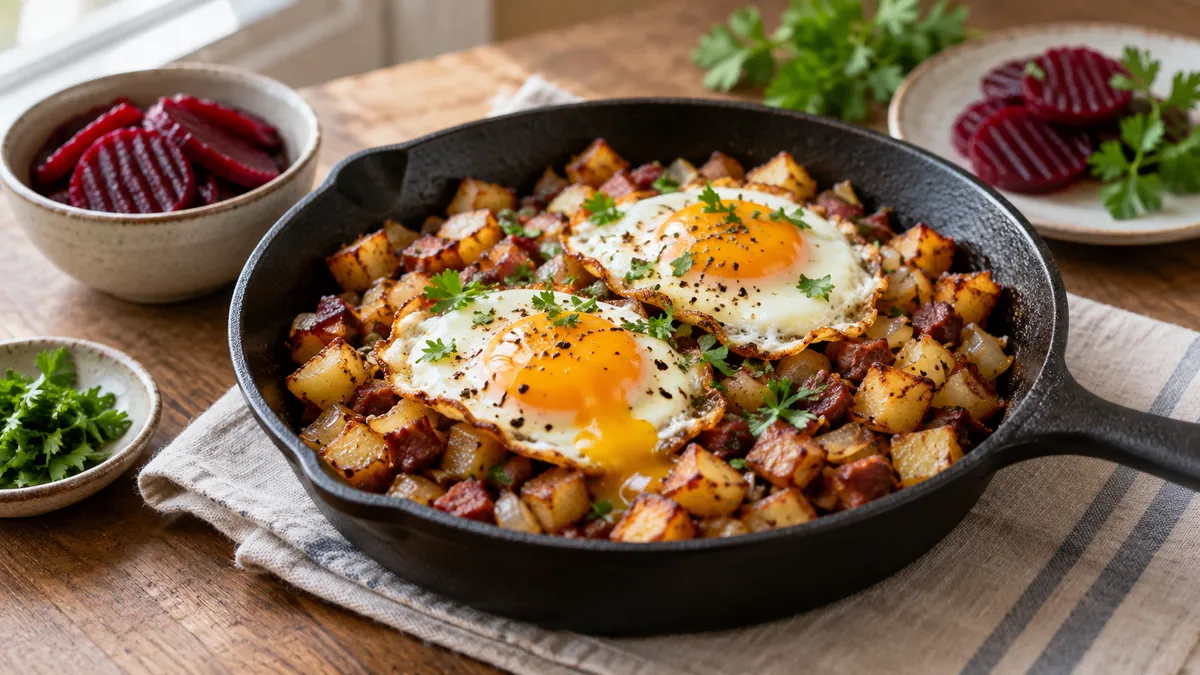
The Swedish skillet hash: diced potatoes, onion and leftover roast beef or ham fried crisp in butter and topped with fried eggs and pickled beets. Serves 4.
Jump to: Ingredients | Instructions | Tips | Questions | Print recipe
Pytt i panna means small pieces in a pan, and it is how Swedes use up the Sunday roast. Diced cooked potatoes, onions and leftover meat are fried until the edges are crisp and golden.
It always comes with a fried egg on top, sliced pickled beets on the side and often a dash of Worcestershire or HP sauce.
Ingredients
- 1 1/2 pounds cooked potatoes, cooled and cut into 1/2-inch dice
- 4 tablespoons unsalted butter or oil, divided
- 1 large yellow onion, diced
- 1 pound cooked roast beef, ham or sausage, cut into 1/2-inch dice
- Salt and black pepper
- 4 large eggs
- Pickled beets and chopped parsley, for serving
Instructions
- Fry the potatoes. Heat 2 tablespoons of butter in a large skillet over medium-high heat. Add the potatoes in one layer and cook for 12 to 15 minutes, turning occasionally, until golden and crisp. Move to a bowl.
- Cook the onion. Add another tablespoon of butter and cook the onion for 5 minutes, until soft and lightly browned.
- Add the meat. Add the meat and cook for 5 minutes, until hot and browned at the edges. Return the potatoes, toss, and season with salt and pepper.
- Fry the eggs. In another skillet, fry the eggs in the remaining butter until the whites are set and the yolks still runny.
- Serve. Divide the hash among plates, top each with a fried egg, and serve with pickled beets and parsley.
Tips
- Cold, leftover boiled potatoes crisp up best.
- Do not stir the potatoes too often; letting them sit is what browns them.
Questions about this recipe
- What meat goes in pytt i panna?
- Leftover roast beef, ham, pork or smoked sausage, alone or mixed.
- Can I use raw potatoes?
- Yes, but parboil the diced potatoes for 5 minutes first so they cook through before they burn.
More Swedish recipes
All Swedish recipes | All recipes | Cooking guide and safe temperatures