Classic Buffalo Wings
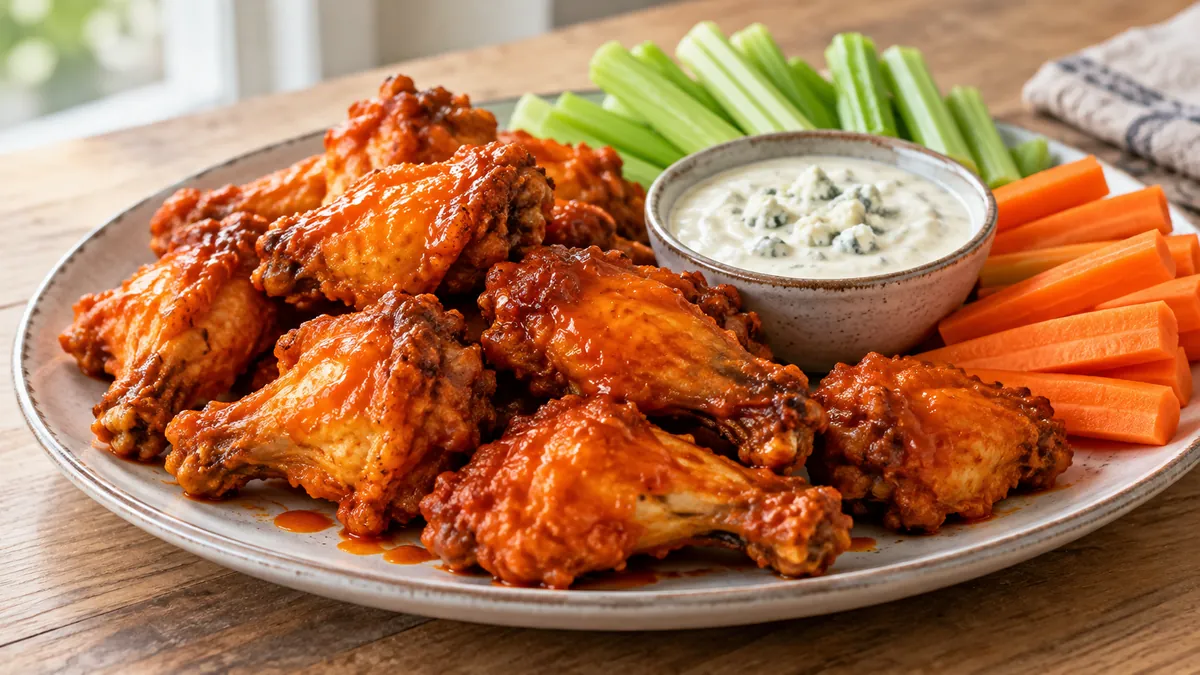
Extra-crispy baked chicken wings tossed in a classic hot sauce and butter Buffalo sauce, served with blue cheese dressing, celery and carrots. Serves 4 to 6.
Jump to: Ingredients | Instructions | Tips | Questions | Print recipe
Buffalo wings were created in Buffalo, New York, in 1964, and the sauce has stayed the same ever since: hot sauce and melted butter. These are baked instead of fried, and a light coating of baking powder makes the skin blister and crisp up just like deep-fried wings.
Serve them the traditional way, with blue cheese dressing and celery sticks.
Ingredients
Wings
- 3 pounds chicken wings, split into flats and drumettes, tips removed
- 1 tablespoon aluminum-free baking powder
- 1 teaspoon salt
Buffalo sauce
- 1/2 cup cayenne pepper hot sauce
- 4 tablespoons unsalted butter
- 1 teaspoon white vinegar
- 1/4 teaspoon garlic powder
For serving
- Blue cheese dressing
- Celery and carrot sticks
Instructions
- Dry the wings. Pat the wings very dry. Toss with the baking powder and salt, set on a rack over a foil-lined sheet pan and refrigerate uncovered for 1 hour or overnight.
- Bake. Heat the oven to 250°F. Bake the wings on the rack for 30 minutes, then raise the oven to 425°F and bake 40 to 50 minutes more, until deep golden and crisp and at least 165°F.
- Make the sauce. Melt the butter with the hot sauce, vinegar and garlic powder, whisking until smooth.
- Toss and serve. Toss the hot wings in the sauce and serve with blue cheese dressing, celery and carrots.
Tips
- Use baking powder, not baking soda, which tastes metallic.
- For milder wings, add more butter to the sauce; for hotter, add a pinch of cayenne.
Questions about this recipe
- Why put baking powder on wings?
- It raises the skin pH so it browns and blisters, giving fried-wing crunch from the oven.
- Can I make Buffalo wings in an air fryer?
- Yes. Air-fry at 380°F for 22 to 25 minutes, shaking twice, then toss in the sauce.
More chicken and poultry recipes
All chicken and poultry recipes | All recipes | Cooking guide and safe temperatures