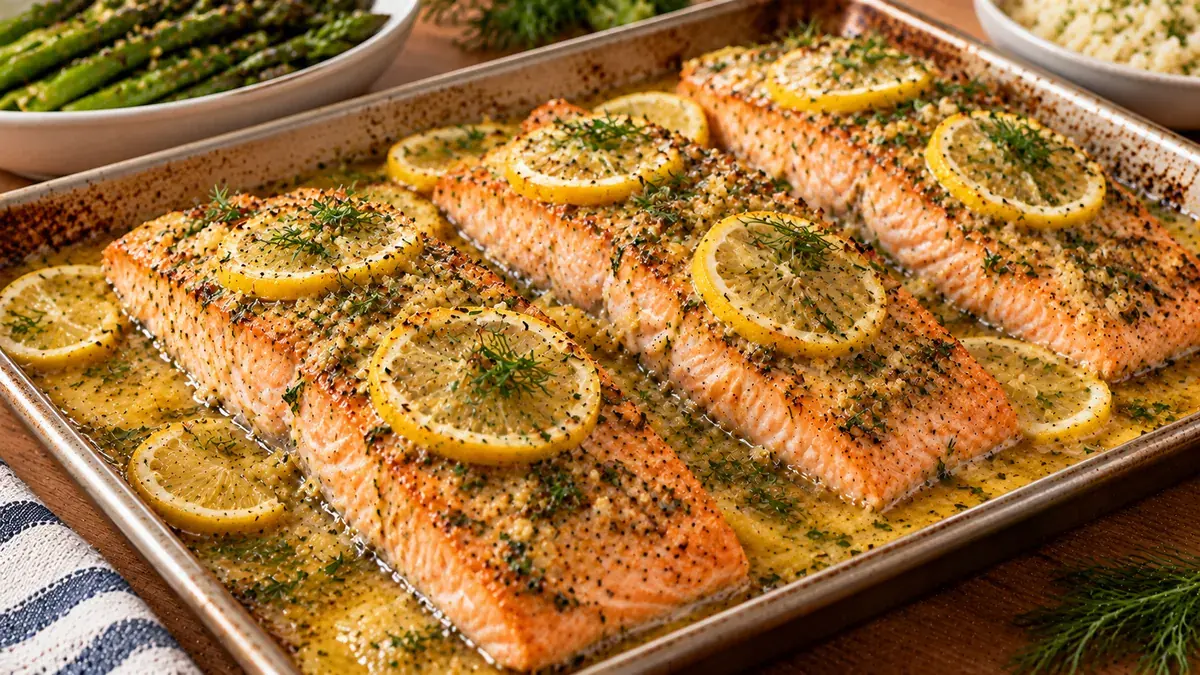
Baked salmon is about as easy as a good dinner gets. The fillets go skin side down on a lined sheet pan, get a generous brushing of melted butter mixed with garlic, Dijon mustard, lemon and fresh dill, and bake in a hot oven for about 12 minutes. There is no flipping and almost no cleanup.
The skin protects the underside of the fish from drying out, and the mustard helps the butter cling instead of running off. Serve it with rice, roasted potatoes or a green salad, and spoon the lemony pan juices over the top.
Ingredients
4 (6 ounce) skin-on salmon fillets, about 1 inch thick
3 tablespoons butter, melted
1 tablespoon olive oil
2 cloves garlic, minced
1 tablespoon Dijon mustard
1 tablespoon fresh lemon juice
1 teaspoon finely grated lemon zest
2 tablespoons chopped fresh dill, or 2 teaspoons dried
3/4 teaspoon kosher salt
1/4 teaspoon black pepper
1 lemon, thinly sliced
Instructions
Heat the oven. Preheat the oven to 400°F (200°C). Line a rimmed baking sheet with foil or parchment and brush it lightly with oil.
Dry the salmon. Pat the fillets dry with paper towels and set them on the pan skin side down, leaving space between them.
Make the lemon butter. In a small bowl, whisk together the melted butter, olive oil, garlic, mustard, lemon juice, lemon zest, dill, salt and pepper.
Season. Brush or spoon the butter mixture evenly over the tops and sides of the fillets. Lay a slice or two of lemon on each one.
Bake. Bake for 12 to 15 minutes, until the salmon flakes easily at the thickest point. Cook it to 145°F, the USDA and FDA safe minimum for fish. Some cooks take salmon out at 125°F to 130°F for a moister center, but that is below the federal safe minimum.
Serve. Let the salmon rest for 2 minutes. To serve it without skin, slide a thin spatula between the skin and the flesh and lift the fillet off. Spoon the pan juices over the top.
Nutrition per serving (estimated)
470Calories
3 gCarbohydrates
<1 gFiber
2 gNet carbs
35 gProtein
34 gFat
Estimated per serving, based on 4 servings, using USDA FoodData Central values for each ingredient. Net carbs are carbohydrates minus fiber. Optional ingredients, garnishes and anything served on the side are not included, and marinades are counted at about a third because most is discarded. Brands and portion sizes change the numbers.
Skin side down. The skin protects the bottom of the fillet from the hot pan and keeps it moist, and you do not need to flip it.
What temperature should baked salmon be?
The USDA and FDA safe minimum for fish is 145°F. Some people prefer salmon removed at 125°F to 130°F, slightly translucent in the center; that does not meet the federal safe minimum and is not advised for anyone pregnant, elderly, very young or with a weakened immune system.
Can I bake frozen salmon?
For the best texture, thaw it overnight in the refrigerator first, then pat it dry. Baking from frozen takes about twice as long and the seasoning does not stick as well.