
A bubbling, spicy Korean stew of well-fermented kimchi and sliced pork belly simmered with onion, garlic and gochugaru, finished with soft tofu, green onion and green chile. Serves 4.
Gluten-free with swapsDairy-freeKetoLow-carb
Contains: wheat, soy. Based on the ingredients as written; check package labels, which can change.
Updated
Jump to: Ingredients | Instructions | Tips | Questions | Nutrition | Print recipe
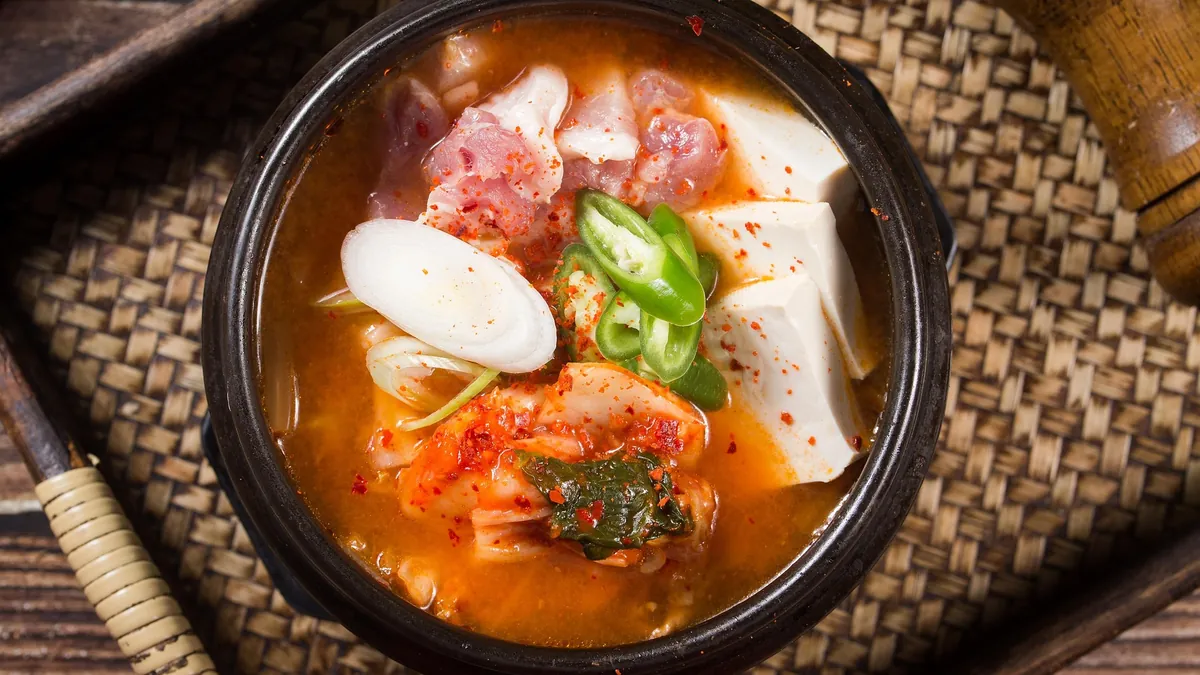
Kimchi jjigae is Korean comfort food and probably the most-made stew in Korean homes. It is the best use for kimchi that has aged in the refrigerator until it is soft and sour, because long simmering turns that sourness rich and savory.
Pork belly is traditional and gives the broth body, but pork shoulder works if you want it leaner. The tofu goes in at the end so it stays soft and soaks up the spicy broth. Serve it bubbling hot with a bowl of rice.
Estimated per serving, based on 4 servings, using USDA FoodData Central values for each ingredient. Net carbs are carbohydrates minus fiber. Optional ingredients, garnishes and anything served on the side are not included, and marinades are counted at about a third because most is discarded. Brands and portion sizes change the numbers.
Every bowl of bulgogi deserves a dramatic entrance. Our Seoul aprons from Shortsleeve.com come in three flavors: Seoul Food, Seoul Cooking and Seoul Kitchen, each with a cheerful chef and enough sizzle to make even kimchi fried rice feel like a cooking show. All are quick-drying with detachable straps, so gochujang splatters wash right out.
 Seoul Food Korean BBQ ApronA cheerful chef, sizzling grilled dishes and kimchi, for Korean barbecue night.Shop Seoul Food
 Seoul Cooking Chef ApronA grinning chef, flames and a pan full of flavor, for every bulgogi night.Shop Seoul Cooking
 Seoul Kitchen Cooking ApronStreet-food energy with a playful chef and a sizzling skillet.Shop Seoul Kitchen
All Korean recipes | All recipes | Cooking guide and safe temperatures