
Briefly boiled clams chopped and tossed with soy sauce, red and green chiles, garlic, gochugaru and sesame, served over rice with garlic chives, onion and crumbled seaweed. Serves 4.
Contains: shellfish, wheat, soy, sesame. Based on the ingredients as written; check package labels, which can change.
Updated
Jump to: Ingredients | Instructions | Tips | Questions | Nutrition | Print recipe
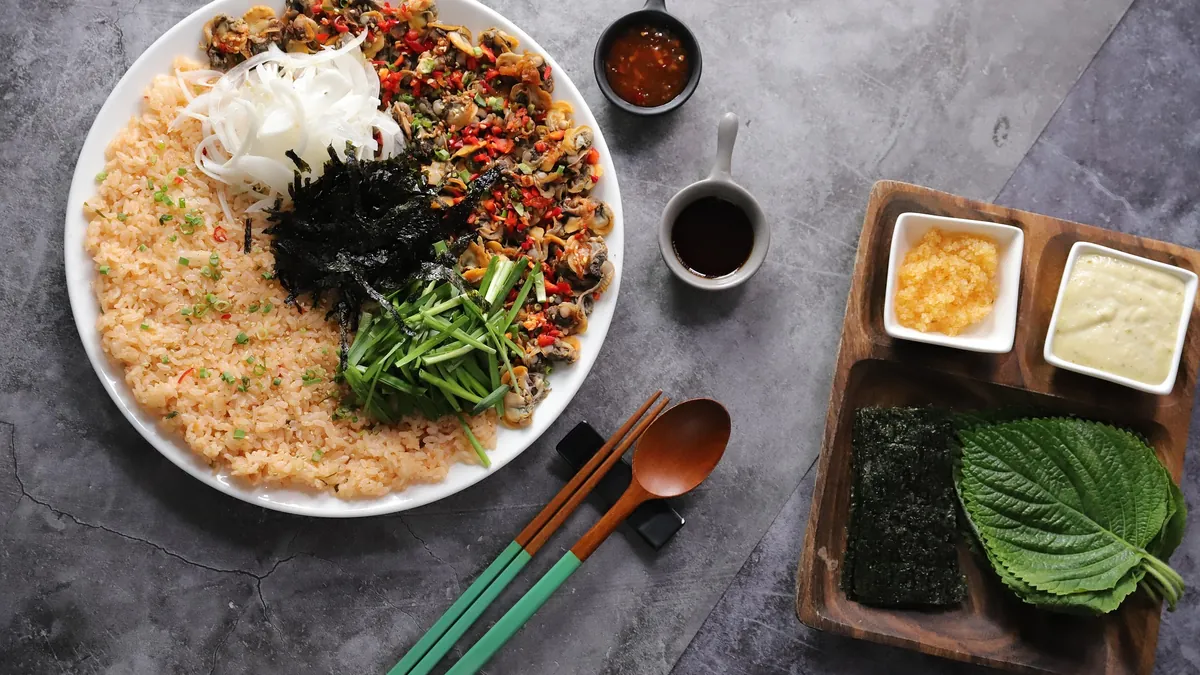
Kkomak bibimbap comes from the southern coast of Korea, where small cockles called kkomak are boiled, shucked and dressed in a spicy soy seasoning, then piled onto rice. It went viral in Korea as a dish people would line up for, and it is easy to make at home with littleneck or Manila clams.
Serve it as a platter for the table to share, with garlic chives, sliced onion and crumbled seaweed on the side. Mix everything together just before eating, and if you like, wrap spoonfuls in perilla leaves or sheets of seaweed.
Estimated per serving, based on 4 servings, using USDA FoodData Central values for each ingredient. Net carbs are carbohydrates minus fiber. Optional ingredients, garnishes and anything served on the side are not included, and marinades are counted at about a third because most is discarded. Brands and portion sizes change the numbers.
Printable: safe cooking temperatures chart (PDF).
Every bowl of bulgogi deserves a dramatic entrance. Our Seoul aprons from Shortsleeve.com come in three flavors: Seoul Food, Seoul Cooking and Seoul Kitchen, each with a cheerful chef and enough sizzle to make even kimchi fried rice feel like a cooking show. All are quick-drying with detachable straps, so gochujang splatters wash right out.
 Seoul Food Korean BBQ ApronA cheerful chef, sizzling grilled dishes and kimchi, for Korean barbecue night.Shop Seoul Food
 Seoul Cooking Chef ApronA grinning chef, flames and a pan full of flavor, for every bulgogi night.Shop Seoul Cooking
 Seoul Kitchen Cooking ApronStreet-food energy with a playful chef and a sizzling skillet.Shop Seoul Kitchen
Build the whole dinner: sides, sauce and dessert ›
Pairs with: an off-dry Riesling or Gewürztraminer, or a cold lager. Wine pairing guide
All Korean recipes | All recipes | Cooking guide and safe temperatures