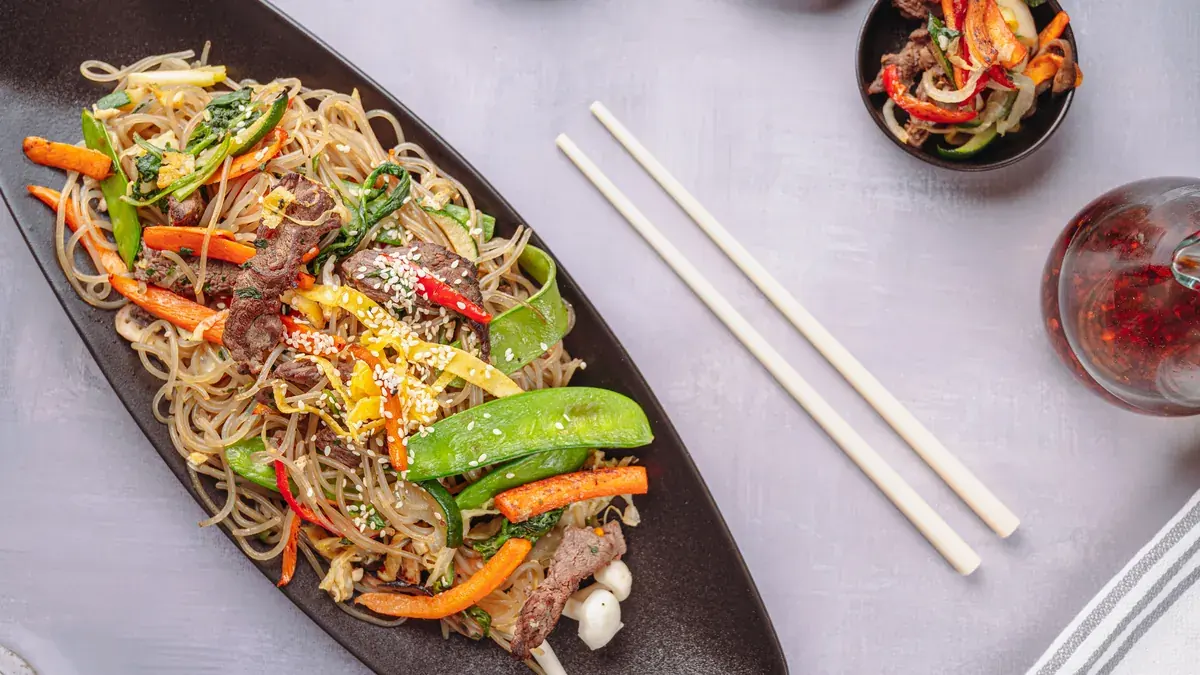
Japchae (Glass Noodles with Beef and Vegetables)

Chewy sweet potato glass noodles tossed with marinated beef, spinach, carrot, onion, bell pepper, snow peas and mushrooms in a sweet soy and sesame sauce. Serves 4 to 6, warm or at room temperature.

Vegetarian with swapsDairy-free

Contains: egg, wheat, soy, sesame. Based on the ingredients as written; check package labels, which can change.

  • Prep 30 min
  • Cook 25 min
  • Total 55 min
  • Yield 4 to 6 servings

Updated

Japchae glass noodles with beef, snow peas, carrots, egg ribbons and mushrooms on a black platter

Japchae is the noodle dish served at every Korean celebration, and it is as colorful as it is good: glossy, springy sweet potato noodles with ribbons of beef and bright vegetables, all seasoned with soy sauce, sugar and toasted sesame oil.

Each vegetable is cooked separately so it keeps its own color and texture, which takes a little time but is not difficult. Japchae holds well, so it is a good make-ahead dish for a party.

Instructions

  1. Marinate the beef. Toss the beef strips with the soy sauce, sugar, garlic and sesame oil and set aside while you prepare everything else.
  2. Mix the sauce. Stir together the soy sauce, sugar, sesame oil, garlic and pepper until the sugar dissolves.
  3. Blanch the spinach. Bring a large pot of water to a boil. Add the spinach for 30 seconds, then lift it out with tongs, rinse under cold water, squeeze dry and cut it into a few pieces. Keep the water boiling.
  4. Cook the noodles. Add the noodles to the boiling water and cook according to the package, usually 6 to 7 minutes, until soft and chewy. Drain, rinse briefly with cold water, and cut them a few times with kitchen shears. Toss with 1 tablespoon of the sauce.
  5. Cook the vegetables. Heat 1 tablespoon of the oil in a large skillet over medium-high heat. Cook the onion and carrot with the salt for 2 to 3 minutes, until crisp-tender, and transfer to a large bowl. Add another 1 tablespoon oil and cook the bell pepper, snow peas, mushrooms and green onions for 2 minutes; add them to the bowl.
  6. Cook the beef. Add the remaining 1 tablespoon oil and stir-fry the beef for 2 to 3 minutes, until browned and cooked through. Add it to the bowl.
  7. Make egg ribbons (optional). Wipe out the skillet, lower the heat to medium-low and pour in the beaten egg, tilting the pan to make a thin layer. Cook for 1 minute, until set, flip briefly, then slide it out, roll it up and slice it into thin ribbons.
  8. Toss and serve. Add the noodles, spinach and the rest of the sauce to the bowl and toss with your hands or tongs until everything is evenly coated. Taste and add a little more soy sauce or sugar if needed. Top with the egg ribbons and sesame seeds and serve warm or at room temperature.

Nutrition per serving (estimated)

440Calories
55 gCarbohydrates
3 gFiber
51 gNet carbs
14 gProtein
19 gFat

Estimated per serving, based on 5 servings (the recipe serves 4 to 6), using USDA FoodData Central values for each ingredient. Net carbs are carbohydrates minus fiber. Optional ingredients, garnishes and anything served on the side are not included, and marinades are counted at about a third because most is discarded. Brands and portion sizes change the numbers.

Dairy-freeVegetarian with swaps

Tips

  • Look for dangmyeon, gray-brown dried sweet potato noodles, at Asian markets. Other glass noodles are thinner and get soft too quickly.
  • Refrigerated leftovers firm up. Warm them in a skillet with a splash of water, or microwave briefly, to bring back the chewy texture.

Cook with a little Seoul

Every bowl of bulgogi deserves a dramatic entrance. Our Seoul aprons from Shortsleeve.com come in three flavors: Seoul Food, Seoul Cooking and Seoul Kitchen, each with a cheerful chef and enough sizzle to make even kimchi fried rice feel like a cooking show. All are quick-drying with detachable straps, so gochujang splatters wash right out.

See more kitchen gifts at Shortsleeve.com

Questions about this recipe

Is japchae gluten-free?
The sweet potato noodles are, but most soy sauce contains wheat. Use tamari or a gluten-free soy sauce if you need it to be gluten-free.
Can I make japchae ahead?
Yes. Make it up to 4 hours ahead and serve it at room temperature, or refrigerate it for up to 3 days and reheat it gently.

Serve it with

Pairs with: an off-dry Riesling or Gewürztraminer, or a cold lager. Wine pairing guide

More Korean recipes