
A bone-in standing rib roast rubbed with garlic, herbs and salt, started at 450°F for a browned crust and finished at 325°F to a rosy medium-rare. Serves 6 to 8.
Naturally gluten-freeDairy-freeKetoLow-carbHigh-proteinPaleoNo added sugar
Allergens: none of the major food allergens in the ingredients as written. Check package labels, which can change.
Updated
Jump to: Ingredients | Instructions | Tips | Questions | Nutrition | Storage | Print recipe
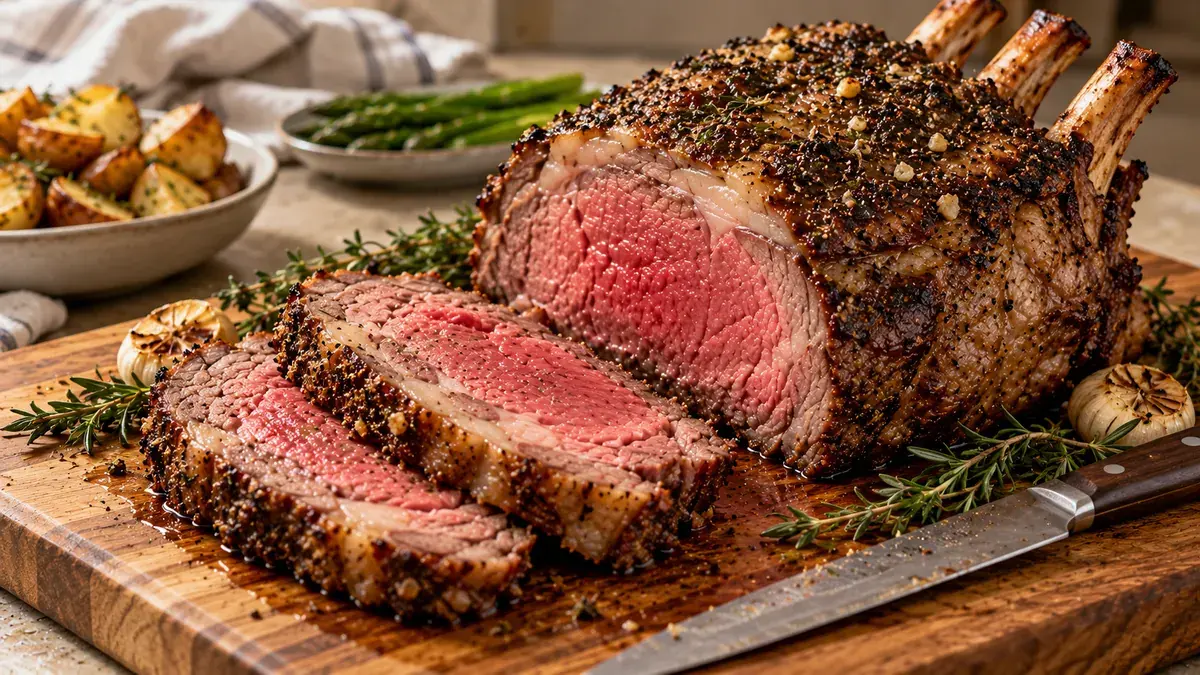
Prime rib is the classic holiday roast: a bone-in section of the rib, the same cut ribeye steaks come from, roasted whole. The bones act as a natural rack and help the meat cook evenly, and the generous marbling keeps every slice juicy.
This recipe starts the roast in a hot oven to brown the outside, then lowers the heat so the inside cooks slowly and evenly. The most important tool is a reliable thermometer; take the roast out at 120°F to 125°F and let it rest for 30 minutes, during which it will rise to medium-rare.
Estimated per serving, based on 7 servings (the recipe serves 6 to 8), using USDA FoodData Central values for each ingredient. Net carbs are carbohydrates minus fiber. Optional ingredients, garnishes and anything served on the side are not included, and marinades are counted at about a third because most is discarded. Brands and portion sizes change the numbers.
KetoLow-carbHigh-proteinGluten-freeDairy-freePaleo-friendlyNo added sugar
Printable: steak doneness chart and cooking times by thickness (PDF).
Serve it with: Prime Rib Au Jus, Creamy Horseradish Sauce, Yorkshire Pudding, Scalloped Potatoes, Soft Dinner Rolls.
Refrigerate leftover slices up to 4 days. Warm slices gently in simmering au jus for 30 seconds to keep them pink, or serve cold with horseradish sauce. Leftovers make excellent steak sandwiches.
What to make with leftover ham, roast beef and steak: recipes for leftovers.
Build the whole dinner: sides, sauce and dessert ›
Pairs with: Cabernet Sauvignon or Malbec. Wine pairing guide
All beef and steak recipes | All recipes | Cooking guide and safe temperatures